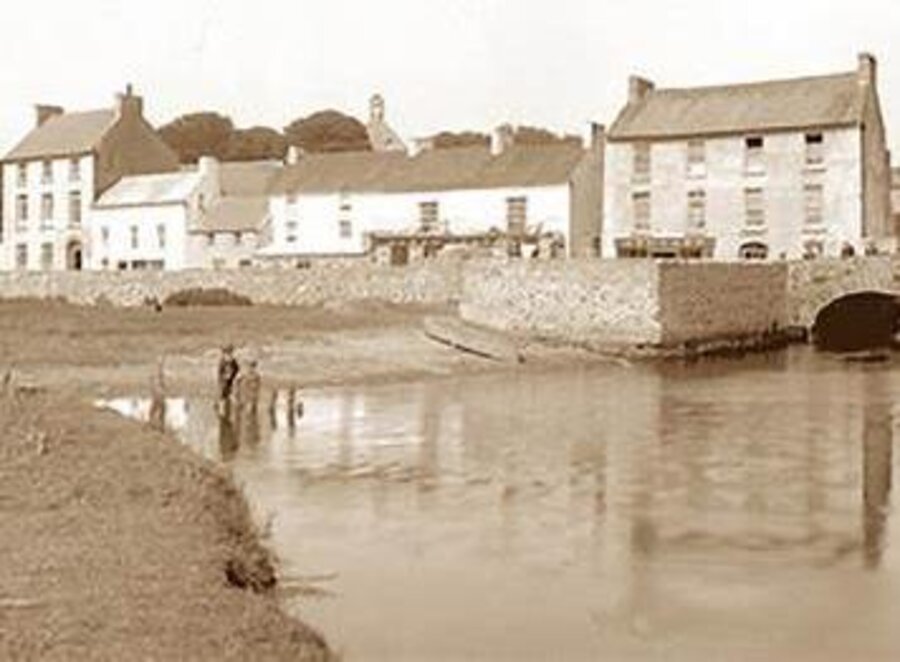
A Protected Structure
The Reading Rooms is a Protected Structure on Wexford County Council's Record of Protected Structures (RPS ref WCC0544), recorded in the Wexford County Development Plan 2022–2028, which notes: "To the south are the Reading Rooms gifted to the community by Guinness." The RPS entry notes that the structure is no longer separately listed on the National Inventory of Architectural Heritage (NIAH), so its protection rests on the county listing. Protection recognises the building's architectural and social heritage and brings with it a duty of careful stewardship — the kind of work heritage funding exists to support.
The building today
It is a rendered building in the village core, kept structurally sound by community repairs through the 1980s and 90s — a slate roof, replastering, windows and central heating. A professional walk-through condition survey (December 2025) found it structurally sound for its age, with a clear and manageable list of repairs — the kind of work heritage funding exists to support. Honestly stated: the building currently has no electricity and no heating, and is not yet insured for public use. Re-establishing community ownership is what allows those things to be put right.
Where the Guinness Book of Records began
In November 1951, a shooting party on the North Slob, just outside the village, ended in a dinner-table argument at Castlebridge House about Europe's fastest game bird — the golden plover or the red grouse. No reference book on the shelf could settle it. Sir Hugh Beaver, managing director of Guinness, realised that questions like it were being argued in pubs across the country with no book to answer them. In 1955 the first edition of what became the Guinness Book of World Records was published.
The record books have been brought back to the room for special occasions — most recently for the Fleadh Cheoil in 2024 and 2025. It is a quiet distinction: the idea was born a short walk away, and the books still return to the room that shares their name.
What the building needs
- A structural and dilapidation survey, to know its exact condition.
- An asbestos survey, standard for a building of its refurbishment history.
- Reconnection of utilities and a light-touch refurbishment.
- Conservation of the external envelope — roof, render and windows — the priorities heritage funding is designed for.